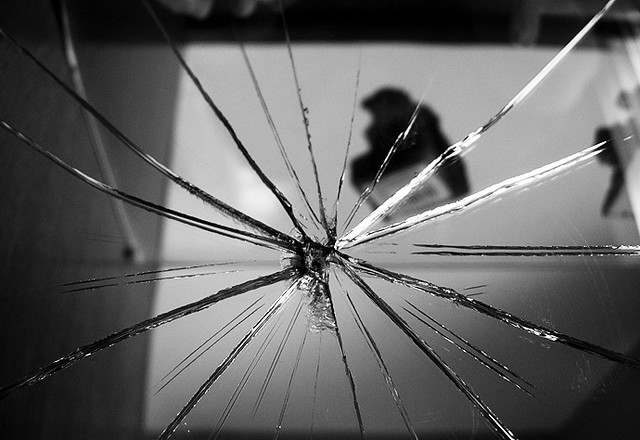
“The man who finds his homeland sweet is still a tender beginner; he to whom every soil is as his native one is already strong; but he is perfect to whom the entire world is as a foreign land.”

~Hugo of St. Victor


Pages

Sunday, March 17, 2019

Evidence of Parenthood

In case you couldn't tell already, here are ten telltale signs that you may have committed parenthood:

1.)  Your mailbox is suddenly fuller than it used to be.


2.)  You find yourself walking with more caution (and reflection).


3.)  Your life is suddenly reorganized in new and creative ways.  


3.)  You feel the paradox of being both unwrapped and all wrapped up.


4.)  There's always a line waiting for your attention.


5.)  You seem to be carrying more weight.


6.)  You learn to think inside the box.  


7.)  You find that standing alone is precarious.  


8.)  Find yourself looking for more signs. 


9.)  You find that silence is sometimes not a good thing....


and other times, it is a very good thing.


10.) Finally, you find your sole is overflowing in ways you never anticipated. 


 If you find evidence that you may have committed parenthood, don't panic.


Don't try to hide the evidence or get yourself out of it.


It is only temporary, and will pass.  Much sooner than you anticipate.


Friday, January 25, 2019

The Skin, The History, and the Stereotype: Translating Identity Across Cultures


Boot and bonnet.  Chemist.  Trolley.  Nappie.  Serviette.  Centre.  Saviour.  Aeroplane. 
Image result for english flag american flag 

One thing I learned in East Africa is that I not only had to learn functional Kiswahili but I also needed to learn English.  Sure, I spoke English, but I spoke American English.  I spoke too fast, didn’t pronounce my letters properly, and I didn’t even know the right words or how to spell.  I needed to learn British English.  I needed to slow down my flow of words and actually pronounce the letters that are in the words (ki-tt-en not ki-in, wa-T-er not wadder) or I would not be understood.  My audience would struggle to understand me, not because they were not capable of speaking English, but because I spoke a “different” English.    

I quickly learned it wasn’t only my language that needed to be translated.  It was me, my self, my body, what I represent through my biologically embodied representation of my particular slice of humanity.

Growing up, I didn’t think too much stereotypes, especially not my own.  I struggled to understand my identity as Tara, as myself as an individual, but I didn’t spend an ounce of energy trying to understand my ethnic identity, racial identity, collective identity, or the identity that others see what they look at me. When I looked in a mirror, I didn’t think about the layers of history written in my genetic code.  I just saw me and my immediate family (i.e. my aunt’s jaw, my grandmother’s nose, my mother’s curl, my dad’s hair) but not traits that said “Swedish,” “Dutch,” “German,” and “English”.  But then again, I never had to.  I’d never been looked down upon or insulted because of the labels of identity that people attribute to me when they see me. 

My first weeks in Kenya, I quickly learned I had acquired new labels.  

Mzungu.

Mzungu” (plural wazungu) now branded me.  I didn’t know what it meant, but I did know that I was no longer invisible.  I couldn’t pass down the street unnoticed or be seen as “normal” but I stood out like a scarlet macaw in a flock of penguins.  My appearance branded me as “other” and I found myself wading through a sludge of symbols so deep I couldn’t lift a tennis shoe without finding myself dripping with the expectations of those around me.

I didn’t understand my interpretation.  Kenyans saw me and labeled me in their framework, reading symbols that I did not know were there, let alone their meaning.  And I discovered I needed to translate what my appearance communicated in my new context.  I needed to understand what it meant to be “me” in their worldview.   

Mzungu comes from the same Kiswahili root word as the words kizunguzungu ( dizziness) and kuzunguka (to turn around in a circle).  It basically means “a person who wanders aimlessly” or “one who is lost” (coined by Swahili inhabitants of the first European explorers based on the actions of the Europeans wandering around “discovering” things the natives already knew were there).  (check it out on Wikipedia for more details).
Image result for colonial kenya

The term has changed in meaning over time and has history has unfurled.  It can be a noun or an adjective.  It can describe a person, an object, or a behavior.  Still, the overall ideas that emerge from the term are something wealthy, powerful, and/or foreign.  It is often used to describe something (or someone) of European descent and takes on the racial undertone of whiteness (which in the East African historical framework are inextricably interwoven with concepts of power, wealth, beauty, and status). 

Wazungu are never poor and wazungu are always “other”. 

I quickly learned that my appearance led to being given the best place in church, on the bus, and in the line at the bank.  It meant the marriage proposals, dinner invitations, ministry opportunities, and business partnerships sought me out faster than the mosquitos.   I didn’t have to prove my qualifications or my worthiness.  People automatically presumed my competence based on my physical appearance.

This also meant I was a walking target.  It meant I was robbed by those I’d never met and those I considered my closest friends.  It meant being sought because of what I represented and not who I was.  Everyone wanted a piece of my pie and tried to convince me to support their cause, their need, their ministry, or their business.  My power and wealth were contagious to those in my sphere of relationships (and so I was uninvited from certain ministries and relationships because I would lead to heightened expectations and "scare away" potential donors).   

Adding the label of “female” made me even more complicated.  I represented free sex (thanks to globalized porn industry) and access to status.  I could give visas, job opportunities, cash, cars, and “add value” to those around me.  I was a free ticket to the “heaven” that is the mzungu world.  I represented the colonizer who could be colonized and the unattainable brought within grasp.  
A stereotype doesn't have to be true to be powerful.

It’s very few people who see below the skin, the history, and the stereotype.  


Hood and trunk.  Pharmacist.  Cart.  Diaper.  Napkin.  Center.  Savior.  Airplane. 

When my husband came to the U.S. from Uganda, he also had to adjust his English.  He’s tried to slur certain words, force his “r” in words like dirt, bird, and water, and not pronounce all the letters in mosquito, leopard, and juice.  His English has had to adjust to include more American slang and idioms.  It’s been part of the process of helping his audience understand him and not consider his fluent English as "broken".

He’s also had to relearn what it means to be him.  He has always experienced people interpreting his appearance.  It happened all the time back home.  Other Ugandans, at one glance, read the tall, lean frame and  deep fudge-colored skin and immediately labeled him as “northern Ugandan” or “Nilotic” as opposed to “Bantu”.  These labels carried an army of stereotypes that he shed like a snake sheds skin when he landed in the U.S. he was interpreted according to those stereotypes.  

Image result for loin cloth east africa spear
African.

It didn’t take a week in the U.S. before Ivan found himself mired in a swamp of symbols he didn’t understand.  In the American context, he has been forced to translate his appearance into the American labels of “Black” and “African” and renegotiate what it means to be him based on how he is interpreted. 

“Black” does not refer to a physical description of aesthetic appearance, but a long, complicated racial history that puts people on a ladder from least desirable to most desirable based on a socially constructed idea of immutable origins.  His skin means he is called n****r, slave, dangerous, and dirty. 

People read his appearance and cross to the other side of the street to avoid walking too close.  The police follow him in their police car and frisk him just to make sure he isn’t causing problems.  His appearance means people interpret his “standing politely and listening” as “threatening” them and will report him to his supervisors for hostility.

Yet his label of “Black” is sometimes countered with “African”.  He is often rejected by African Americans as being “not Black” and told to go back to where he is from.  His status as “African” also means he is exotic and is sought out by “White” Americans to share about what it’s like to be African and poor. 

Africans are always poor and Africans are always “other”.    

Ivan thought he was Ugandan and from the “Pearl of Africa,” the “Source of the Nile,” and he came proud of his heritage.  He quickly learned he should say he is Jamaican.  African is associated with deranged dictators, child soldiers, famine, civil war, AIDS, and poverty.  To be African means to be incompetent and inferior to an American in all things.  To be African means he must have lived with a pet lion, hunted with a spear, clothed in a loin cloth, and only experienced literacy, English, electricity, and automobiles upon U.S. soil.  He is congratulated on finally making it to the "heaven" that is America and freed from the "hell" of Africa.

As an African in America, he learned it means he is wrong.  His English is wrong, his education is wrong, his job experiences are wrong, and his culture is wrong.  He needs to go back to zero, relearn everything, redo everything until he can be reborn “American” and know how to do things “right”.  Until he throws off everything “African” about him, he will just be another “unskilled worker from a s***hole country”(source), no matter how many skills, degrees, and doctorates he possesses.  
A stereotype doesn't have to be true to be powerful.  A jug labeled milk will be treated differently than a jug labeled paint, regardless of contents.  

It’s very few people who see below the skin, the history, and the stereotype. 
Image result for reflection in mirror

We were born into bodies that we did not choose, into ethnicities we did not intend, and into nationalities that were chosen for us.  Yet these markers of identity still communicate to our audience deeply powerful symbols that influence how we are understood and perceived.  

In cross-cultural interactions, it’s not only the language we speak and way we greet that needs to be translated.  There’s a long process of renegotiating identity: who am I?  Who do other people think I am?  What does it mean to be me?  How do I interact with the world around me based on how this world understands me? Who should I become in future? 

Sometimes we do not know what we communicate through perceptions of our skin, history, or stereotype.  And sometimes we are forced to learn, unlearn, and relearn our own embodied symbols in order to understand how our identity translates across cultures.  
Image result for translation

Friday, December 7, 2018

Healing Invisible Wounds


(photo credit: https://www.maxpixel.net/Reflexiologie-Massage-Therapy-2802790)


She dug her hand into my left hip and I internally groaned in both pain and relief.  Her strong fingers pushed and prodded into the lumpy, misshapen flesh, the remnants of a partially healed scar. 

Every couple of years, I’m reminded of the past when my hip once again begins to ache.  A massage magically evaporates the pain and I can function again like nothing ever happened.  But every few years, it begins again.  The echo of past trauma that begs me to feel the lumps and lines and hard creases deep within and to face my scars. 

The other wound is the one people see.  The four inch bride of Frankenstein monstrosity on my calf might as well be circled in blue highlighter with a “look here” sign written in Sharpie.  People see that scar and they ask questions. 

“What happened?”

“How did you get that?”

Or, my favorite thus far, “Did you die?”

The funny thing is that scar doesn’t hurt.  There is no ache.  It disappears into my daily life until I happen to turn to see if my skirt is on straight.  I look at my scar, it looks at me, we both shrug and move on with our day.  Yes, it isn’t going away, but it’s healed. 

My hip never garners attention or tells a story.  It’s an invisible scar that no one can see, but it likes to make sure I can’t forget it.  From day one, my calf screamed for attention from everybody else like a town crier in the center of the city square.  My hip swallowed all my attention for a month.  It relegated me to crutches, stole my independence, and pulled tears out of my eyes like a freshly cut onion.  The bruises went away but the wound has never fully healed. 

About nine years ago, a sweet grandmother received a new car and driving lessons from her doting son.  On one warm afternoon, the son decided it was time for another lesson.  He patiently sat next to his mother and instructed her how to navigate the bustling Kampala traffic.  As they approached an intersection, traffic stopped ahead.  Unfortunately, the grandmother did not.  Grandmother momentarily forgot which pedal was the brake and which was the gas.  She guessed wrong and rear-ended a pickup truck. 

But first she rear-ended me.  Seeing the stopped cars, I had chosen that same moment to walk across the street.  With a crash and a bang and a creaking of bending metal, I found myself getting acquainted with two different bumpers simultaneously.  Her car met my left hip and smashed the back of my leg against the truck.  The truck’s license plate met my calf, slicing me in what I suspect was revenge for the rather impressive Tara-shaped dent on the truck’s back bumper. 

I decided I’d seen both cars quite enough and tried to walk away, only to find I couldn’t walk and collapsed onto the dusty road.  The grandmother and her son carried me to their car and took me to the nearest hospital. 

I spent the rest of the day telling the doctors they were checking the wrong injury.  They kept looking at the blood.  Their attention was called by what they perceived was the greatest injury.  I fought to draw their attention to what I perceived was my greatest injury.   They poked and prodded and pulled as I shouted, “That’s not where it hurts.  It hurts here!” 

My calf got stitches and antibiotics.  My hip got an x-ray and a pronouncement of “soft tissue damage” and was never treated or looked at again.  


Wounds heal.  My calf scarred over, had its stitches removed, and slowly turned a mellow pink instead of an angry red.  My hip turned a rather fantastic palette of rainbow colors before the bruises melted away into an invisible, lumpy plain.

I appreciated my masseuse last week.  She never asked about my calf.  I told her my hip hurt and so she went straight for where it hurt.  She didn’t avoid it, pretend it didn’t exist, or tell me it shouldn’t hurt.  She didn’t tell me my other wound needed her more.  She didn't even speak.  She listened.  Then she helped me where I needed it most.  When I left, my hip no longer hurt. 

Jesus is a lot like my masseuse.  He’s not afraid to deal with me where I hurt most.  He will go straight to my deepest, most sensitive wounds and insist on bringing healing there.  Sometimes He deals with stitching up currently bleeding wounds and sometimes He waits until I have enough strength and scar tissue to face reopening and revisiting old wounds. 

He’s been doing the same thing to my heart lately.  He whispers I need to forgive an old friend and then that friend just happens to come into town.  He nods His head in the direction of a past humiliation and as I face it, He brings someone to rub joy all over it instead.  He shouts about an old sorrow I need to grieve and then sends me a whole army of friends with tissue boxes.  
(Photo credit: https://www.flickr.com/photos/span112/3126723470)

He refuses to let me sulk and stew and stay content as a poorly patched up Frankenstein of a soul.  He insists on regeneration and new life and will not rest until I have my limbs reattached properly.  I work so hard to bury old hurts in the past so I can function in the present.  But Jesus won’t settle with partial healing.  He drags open the dusty, taped up boxes and empties out the forgotten cupboards in my heart.  As He carefully excavates, He throws out all the dirt and dust bunnies and trash to unearth the treasures that are worth finding and worth remembering.  Those treasures would otherwise have remained hidden underneath the muck and mire, the humiliations and failures that I’d rather not revisit, but He wants me to find them. 

Wounds, even invisible ones, can still ache until they are dealt with.  Just because I can’t see it, doesn’t mean I can’t feel it or that it doesn’t affect me.  Time can start the healing process, but sometimes I need a little help kneading out the lumps.

I’m glad that Jesus is a great masseuse. 

Friday, November 16, 2018

Woman


(Photo credit: Ugandan batik. My kitchen wall.)

Innermost cells to outermost frame,
DNA, bones, and chromosomes.
Birth to death, conception to disintegration,
She is Female.

Her ease or hardship are inscribed in her bones.
Her skeleton tells her story.
Disease, childbirth, nutrition, age.
Her grave and lifeless body cry out,
"Woman's Life."


(Photo Credit: https://www.flickr.com/photos/wessexarchaeology/118761545)

Her smaller body matures faster but runs slower.
She tires faster but lives longer.
Her less muscular body has its own strength,
Built to withstand famine and disease
And see enough sunrises to grow gray hair.
She is Female.


(Photo credit: https://www.pexels.com/photo/old-woman-617871/)


The beautiful mystery.
Creating, recreating, procreating,
and renovating the next humanity.
Connecting the ancestors with the descendants,
The past and future,
Knit together in a tiny, helpless bundle of possibility.
Two parts make a whole.
Male and Female.


(Photo Credit: https://commons.wikimedia.org/wiki/File:Jacques_D%27Agoty_-_Anatomy.jpg)

Womb, child bearer, child carrier, fertile ground.
The curse and the blessing,
Adds value and detracts, defines and destroys.
Her body holds, expands, encompasses, sustains, and nourishes.
New Life.

Her body is torn asunder.
That possibility violently explodes into reality.
From death comes life and from life comes death.
How many die so that life can win?
Blood and water, tears of pain and joy, grief and change.
A microcosm of life in one first cry.
She is Female.


(Photo credit: https://hellochristian.com/627-paintings-that-capture-the-beauty-of-getting-a-baby by Amanda Greavette: http://amandagreavette.com/index2.php#/home/)

But is she a Woman?
Does womanhood begin at menarche, marriage, or maternity?
At coming of age or a QuinceaƱera?
Circumcision or consummation?
Does it come through the birth of sons
Or through acquisition of daughters-in-law?
What if she never recreates herself?
She is female but what makes a woman?

She sounds like a woman.
Language, grammar, pronunciation.
Her voice and her songs. Her stories and her jokes.
Her laughter, her tears.
She even sounds like a woman in her silence.


(Photo credit: maybe me or a team mate? somewhere in northern Ethiopia.)

She looks like a woman.
Her pink, her black, her burqa, her dress,
Her gomesi, her habit, her kemis and her huipil.
She advertises her femininity by covering it.
Adorned in jewels and bangles, henna and lace, curls and flowers.
She must show she is a woman.

But that is not enough.
Ethnicity, class, religion, marital status, and age.
What kind of woman is she?


(Photo credit: https://upload.wikimedia.org/wikipedia/commons/thumb/f/f4/Akha_laos_11_03d.jpg/256px-Akha_laos_11_03d.jpg)

Not all women are created equal.
Not all women are the same.

Young, old.
Maiden, spinster, widow.
Muslim, Catholic, Hindu,Christian, Pagan.
Rich, poor, middle class.
Third World, modern.
Civilized, savage, primitive.
Urban, rural.
Illiterate, educated.
Slave, free, servant.
Adjectives matter.


(Photo credit: https://commons.wikimedia.org/wiki/File:Sojourner_truth_c1870.jpg)

Woman’s work. Woman’s job.
Woman’s sphere.
Domestic. Woman’s place.
Adjectives matter.


(photo credit: https://fashion-history.lovetoknow.com/image/214325~Ancient_Times_Roman-Christian.JPG)

Wo-man. Fe-male. The opposite of male.
Can man be defined without woman?
Can woman be defined without man?
The Other.


(Photo credit: https://pixabay.com/en/couple-love-man-woman-love-couple-1276629/)


She’s the helpmate, the missing rib, his biggest fan,
His other half, his support, his completion.
She’s the temptress, the seductress, the thorn in his side,
His distraction, his destruction, his pollution.
She is dangerous.

Mysterious, uncontrolled, and incomprehensible.
She must be dominated, tamed, and bridled.
She is his conquest, his trophy, his proof of manhood.
His mirror.


(Photocredit: Public Domain, https://commons.wikimedia.org/w/index.php?curid=1029259)
“You play like a girl, run like a girl, scream like a girl, act like a girl.”
“That’s a girl’s job.”
“Stop being such a girl.”
“Girls can’t do that.”
“You are only a woman.”
“But you are a woman.”
An insult, a blemish, a detraction, a definition.


(Photo credit: https://en.wikipedia.org/wiki/File:Pomare,_Queen_of_Tahiti,_the_persecuted_Christian,_by_George_Baxter,_1845_(frameless,_digital_restoration).jpg)

Not enough, never enough.
Starve, purge, fatten, bind, cut, primp, paint, and fix.
Pursue beauty, find worth, seek value.
She wars with her biology.
She was born with this body.
She is Female.
She is Woman.
How can she escape it?


(photo credit: https://commons.wikimedia.org/wiki/File:Bride_by_prakhar.jpg)

The last resort queen, judge, successor.
Her birth is unfortunate, unlucky.
The unwanted females.
She is buried in death before her birth.
The family burdens.

Caretaker, nurturer, rock, strength.
She ties them all together.
Protector of home and hearth, tradition and ritual.
Caring for the weak, the sick, the young, the old.
Mistress of her castle, matriarch of her kin.
Respected by her people.
She carries the family burdens.


(Photo credit: https://www.spectator.co.uk/2014/11/elizabeth-i-queen-of-the-waiting-game/)


Do not let her read, write, or learn.
Do not let her speak, teach, or influence.
Keep her quiet, ignorant, toothless, bound.
Isolated from friends, kin, and connections.
Marry her to an older man. Marry her too young.
Wear her out with hard labor and a full womb.
Chain her to her place, her world, her sphere.
Then she is safe.


(Photo credit: https://images.metmuseum.org/CRDImages/gr/original/DP118070.jpg)


Educate her. Teach her to read, write, and learn.
Give her a voice, power, platform.
Let her change the world.
Teach her to despise being a mother, to hate her body.
Marry her old or don’t marry her at all.
Keep her single and alone.
Keep her independent, safe, in control.
Make her strong, bold, and competitive.
Let her invade the male sphere,
As long as she knows the male sphere is better, she is still safe.
Who wants to be a woman?


(Photo credit: https://www.pinterest.co.uk/pin/571323902723512426/)

She is bought and sold, kidnapped and conquered.
Her home and body are invaded.
She smuggles drugs and weapons, Bibles and food.
She supplies soldiers, hides her men, and protects her children.
She knows danger.


(Photo credit: https://upload.wikimedia.org/wikipedia/commons/thumb/4/4c/Kikyuyu-woman.jpeg/512px-Kikyuyu-woman.jpeg)

The mystic, ascetic, the holy.
The shaman and the healer.
She knows the Divine as husband and bridegroom. 
She receives prophesies, dreams, visions, and spirits.
And she was burned on the stake as a heretic, witch, and martyr.

She is too permeable.
The line between her body and others,
her spirits and others, is too fluid.
She is in danger of invasion.
She is dangerous.

She is Woman.


(Photo credit: https://en.wikipedia.org/wiki/Joan_of_Arc#/media/File:Stilke_Hermann_Anton_-_Joan_of_Arc%27s_Death_at_the_Stake.jpg)